
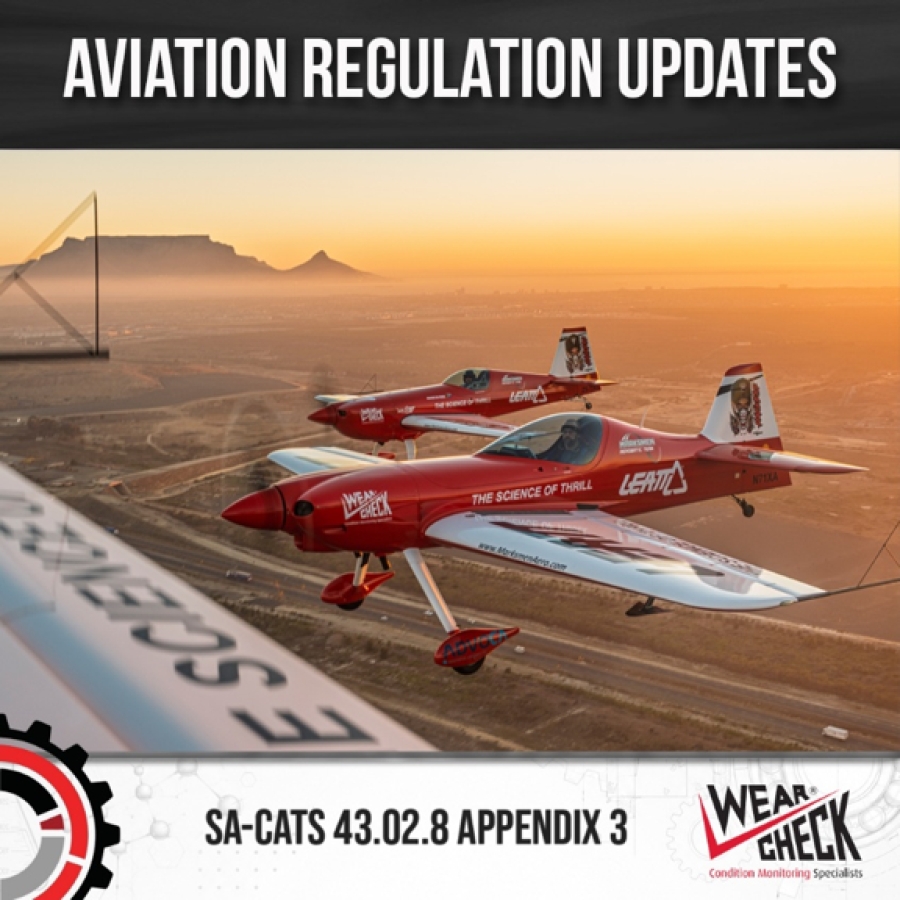
South African general aviation has entered a new era of condition-based maintenance. The Thirty-Sixth Amendment of the Civil Aviation Regulations, 2026 was recently promulgated, bringing into effect the regulatory framework for a formal Condition Monitoring Programme (CMP) under SA-CATS 43 Appendix 3.
The change addresses the long-debated “12-year rule” and creates an on-condition pathway for eligible privately operated, type-certificated piston aircraft to continue operating beyond applicable time or calendar time between overhaul (TBO) limits, provided engine condition is demonstrated through structured monitoring.
Rather than assuming that every engine deteriorates at the same rate, the CMP recognises that utilisation, operating conditions and maintenance practices vary. Continued service therefore depends on evidence of engine health, rather than age or operating hours alone.
From Time-Based to Condition-Based Maintenance
The CMP does not relax safety standards. Instead, it places greater emphasis on disciplined monitoring, accurate records and informed engineering judgement.
Condition monitoring includes oil-filter inspections at every oil change, spectrographic oil analysis, borescope inspections, leak-down or blow-by testing and continuous operational monitoring by the pilot. Importantly, no single result should be considered in isolation. Decisions depend on trends, correlations and the overall picture of engine condition.
Why Oil and Filter Analysis Matter
Engine oil is more than a lubricant: it is also a valuable source of information about what is happening inside the engine. As it circulates, it carries wear metals, contaminants and degradation products that can reveal developing problems.
Routine oil analysis can help detect abnormal wear, identify contaminants such as fuel, water, dust and lead by-products, monitor oxidation and viscosity changes, and track emerging problems over time.
Filter analysis complements this by identifying larger wear particles that may not appear in standard spectrometric analysis. Together, oil and filter analysis can provide early warning of component distress before functional failure occurs.
The real value lies in trend analysis. Reliable diagnosis depends on consistent sampling intervals, repeatable sampling methods, historical results and expert interpretation. A single result provides a snapshot; whereas a sequence of results reveals the direction in which engine health is moving.
Opportunity with Responsibility
The new framework offers private aircraft owners the potential to avoid unnecessary overhauls, reduce maintenance costs and improve aircraft utilisation. However, the flexibility comes with increased responsibility. Owners operating under the CMP must comply with its requirements, maintain appropriate records and work closely with an Approved Maintenance Organisation to demonstrate continued airworthiness.
WearCheck’s aviation oil- and filter-analysis programme supports this approach through trend-based analysis, aviation-specific interpretation, wear-particle identification, filter-debris analysis and integrated reporting on wear, contamination and lubricant condition.
Oil analysis does not replace engineering judgement. It strengthens it by providing objective evidence on which maintenance decisions can be based.
With the CMP now in force, condition monitoring has moved from a proposed alternative to an important part of South Africa’s general aviation maintenance framework. A disciplined, trend-based oil- and filter-analysis programme can help owners extend engine service safely while protecting reliability, performance and confidence in their aircraft.
For more information on aviation oil and filter analysis, contact WearCheck.